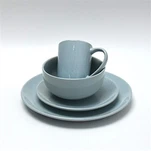
Ceramic tableware, ranging from the roughest earthenware to the finest fine pottery and porcelain, belongs to its scope. Its main raw materials are silicate minerals derived from nature, such as clay, feldspar, quartz, etc. Therefore, it belongs to the category of "silicate industry" along with industries such as glass, cement, enamel, refractory materials, etc. The firing and application of ceramic tableware has a long history in China. It is popular among countrymen because of its diverse shapes, colorful colors, cool and smooth feel, and easy washing. The production methods of ceramic tableware are divided into three types: overglaze color, underglaze color, and underglaze color. Glazed colored ceramics are made by using pigments to make flower paper, which is attached to the glaze surface or directly painted on the surface of the product with pigments, and then baked at low temperatures. Since the baking temperature cannot reach the degree of melting of the glaze layer, the flower surface cannot sink into the glaze. Touch the glazed ceramic with your hand and feel a noticeable unevenness on the surface; The baking temperature of underglaze colored ceramics can melt the glaze, allowing the pigment to sink into the glaze. After cooling, it is covered by the glaze layer, resulting in a smooth surface of the product with no obvious unevenness when touched by hand; All underglaze colored ceramics are decorated on the porcelain body, and after glazing, they are fired at high temperature once. The flower surface is covered by the glaze layer, which looks bright, smooth, and has a smooth hand feel.